Coming July 7th, 2026
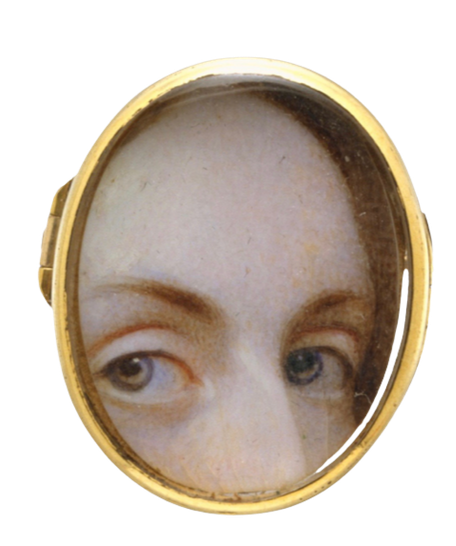
Miss Bates
Emma Revisited
“I read Miss Bates in a single, enraptured sitting. Cliff's prose is a joy — precise and rich and wickedly observant — and her Miss Bates, long underestimated, is one of the most fully realized characters I've encountered in fiction. It is a love letter to Austen, a propulsive sequel to Emma, and a brilliant, moving work in its own right.”
—Belle Burden, New York Times best-selling author of Strangers
“Henrie Bates is a brilliant character and the contrast between her inner and outer world heightens the humor—and tragedy—in this superb exploration of a character who is so often a source of ridicule. Impressively, Catherine Cliff has struck a tone that feels beautifully similar to Austen's wry satire. Miss Bates is a wonderful portrayal of the rich inner world and inspiring inner fury of a powerless woman.”
—Caroline Lea, author of Love, Sex, and Frankenstein
“In this bold and beguiling debut, Catherine Cliff performs a feat that would make even the great Jane Austen raise an eyebrow: she rescues Miss Bates from the margins of Emma and restores to her a rich, secret interior life. Long dismissed as the garrulous bore of Highbury, Henrietta Bates emerges here as a woman of fierce intelligence and quiet strategy, whose endless chatter is not foolishness but armor; a performance honed for survival in a society that has no place for the poor, the plain, or the unmarried.”
—Paula Byrne, author of The Real Jane Austen and Six Weeks by the Sea
Preorder
Miss Bates
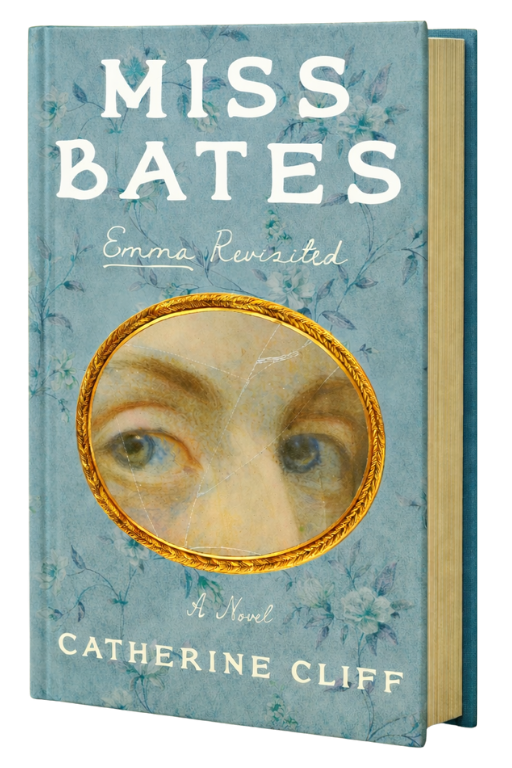
The Story of Miss Bates
A daring re-imagining of an Austen classic romance from the unflinching viewpoint of a woman outside the genre.
Henrietta Bates, the iconic bore of Austen's Emma, is the opposite of handsome, clever, and rich Emma: she is plain, ill-educated, and impoverished. An unmarried woman of quite a different order from that novel's avowedly single heroine, she is an object of scorn and pity, whose survival depends upon the generosity of her neighbors which she barters for with an unrelenting shower of banal and grateful chatter.
But what if the woman we see in Emma were actually deliberately assuming a role, donning a mask, as a way to hide whatever is frightening to the rest of her world about a woman outside the bonds of husbands and babies.
This is no marriage plot; it is a spinster plot.
Or maybe, the spinster’s plot.
Never mind, Harriet, I shall not be a poor old maid: and it is poverty only which makes celibacy contemptible to a generous public! A single woman, with a very narrow income, must be a ridiculous, disagreeable, old maid! the proper sport for boys and girls.
—Jane Austen, Emma
For a very narrow income has a tendency to contract the mind, and sour the temper. Those who can barely live, and who live perforce in a very small, and generally very inferior, society, may well be illiberal and cross. This does not apply, however, to Miss Bates; she is only too good natured and too silly to suit me; but in general, she is very much to the taste of everybody, though single and though poor...and nobody is afraid of her: that is a great charm.
—Jane Austen, Emma
ABOUT THE AUTHoR
Catherine Cliff grew up in New York City. She has a BA in Classics and English from Harvard and a doctorate in English literature from Yale, specializing in English Renaissance poetry. She lived in London and Basel for many years and is now settled in western Massachusetts. This is her first novel.